
Chinese Researcher Claims First Gene-Edited Babies
A Chinese researcher claims that he helped make the world’s first genetically edited babies — twin girls born this month whose DNA he said he altered with a powerful new tool capable of rewriting the very blueprint of life.
If true, it would be a profound leap of science and ethics.
Many mainstream scientists think it’s too unsafe to try, and some denounced the Chinese report as human experimentation.
The researcher, He Jiankui of Shenzhen, said he altered embryos for seven couples during fertility treatments, with one pregnancy resulting thus far. He said his goal was not to cure or prevent an inherited disease, but to try to bestow a trait that few people naturally have — an ability to resist possible future infection with HIV, the AIDS virus.
There is no independent confirmation of He’s claim, and it has not been published in a journal, where it would be vetted by other experts. He revealed it Monday in Hong Kong to one of the organizers of an international conference on gene editing that is set to begin Tuesday, and earlier in exclusive interviews with The Associated Press.
Some scientists were astounded to hear of the claim and strongly condemned it.
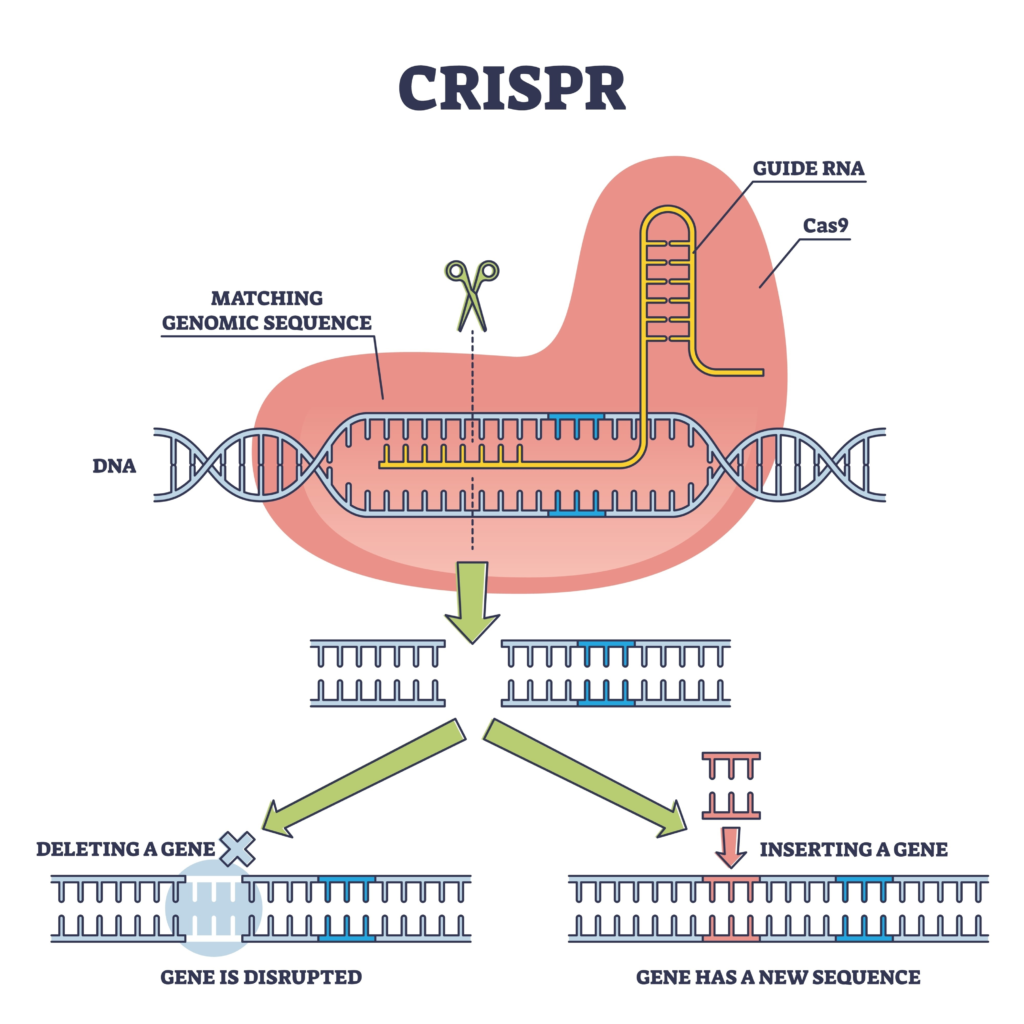
In recent years scientists have discovered a relatively easy way to edit genes, the strands of DNA that govern the body. The tool, called CRISPR-cas9, makes it possible to operate on DNA to supply a needed gene or disable one that’s causing problems.
It’s only recently been tried in adults to treat deadly diseases, and the changes are confined to that person. Editing sperm, eggs or embryos is different — the changes can be inherited. In the U.S., it’s not allowed except for lab research. China outlaws human cloning but not specifically gene editing.
Vocabulary
genetically edited babies – infants whose DNA has been deliberately altered during the embryo stage using biotechnology, “The debate over genetically edited babies involves major ethical and safety concerns.”
blueprint of life – a metaphorical phrase referring to DNA, which contains all the biological instructions needed for an organism to grow and function, “Scientists look at DNA as the blueprint of life because it determines our physical traits.”
profound leap – a major, highly significant advancement or breakthrough in a particular field, “The invention of the internet was a profound leap for global communication.”
denounced – publicly criticized or declared something to be wrong, unjust, or illegal, “The medical community denounced the unauthorized clinical trial.”
human experimentation – scientific testing or medical trials performed on living people, often carrying high ethical risks, “Strict laws were created to protect people from dangerous human experimentation.”
bestow a trait – to give or grant a specific characteristic or quality to a living thing, “The scientists hoped the genetic modification would bestow a trait of drought resistance to the crops.”
independent confirmation – verification or proof of a claim provided by an outside, completely unbiased source, “Before the discovery is officially accepted, we need independent confirmation from another lab.”
vetted by other experts – carefully examined and checked by specialists in the same field to ensure accuracy and validity, “Medical papers must be vetted by other experts before they are published in major journals.”
astounded – completely shocked, amazed, or surprised by something unexpected, “I was astounded by how quickly the technology had advanced in just one year.”
strongly condemned Forcefully and publicly expressed complete disapproval or anger regarding an action, “The international community strongly condemned the company’s reckless safety violations.”
CRISPR-cas9 – a powerful, precise biological tool used by scientists to cut and edit specific pieces of DNA inside a cell, “CRISPR-cas9 allows researchers to target and disable faulty genes with incredible accuracy.”
confined to that person – restricted or limited to one specific individual without affecting anyone else or future generations, “Because the therapy was done on adult cells, the genetic changes were confined to that person.”
inherited – passed down from parents to their children through genetic material, “Eye color is an inherited trait that we get from our biological parents.”